

Once again, highlights of the books I read in the past year, including a tale told by a beech marten, memoirs by people much older than me, and a recurring theme of work. (Previous years: 2024, 2023, 2022, …, 2015.)
Memoirs
I live in Eugene, Oregon, nicknamed “Track Town USA” and the birthplace of Nike, and I work at the University of Oregon, whose biggest donor by far is Nike’s co-founder Phil Knight. I was therefore motivated to read Knight’s 2016 memoir, Shoe Dog, written when he was 78, despite not being generally interested in business books or in Nike. I was surprised to find that it’s excellent, capturing a chaotic and meandering start to what is first an importer of Japanese running shoes, then its own shoe company, then more, while always at risk of collapse, buffeted by odd personalities and the vagaries of international commerce. It focuses on the years from the start (1962) to Nike’s public offering (about 1980). The last chapter, the only dud, describes everything that came afterwards – in brief, success. Knight paints a picture of himself that is not as flattering as I expected; he describes his occasional bending of the truth, his monomania, and his generally supportive but sometimes callous treatment of early employees. He also comes across as thoughtful and genuinely interesting.
I had seen in the new book display at the Springfield Public Library Patrick Stewart’s 2023 Memoir, Making It So, and being fond of Star Trek: The Next Generation, I listened to Stewart’s self-narrated work. The first third is riveting. Stewart describes growing up in a poor / working class family in Northern England, becoming captivated by theater in general and Shakespeare in particular, taking odd jobs, and becoming an actor thanks in large part to excellent local schools and communities. The town council, if I remember correctly, offers a scholarship to attend a highly regarded acting school that would normally be far beyond his means. The combination of high standards and public support for education is a powerful one, which we in twenty-first century America seem to be forgetting. The middle third of the book covers Stewart’s days as a professional actor, including his time in the Royal Shakespeare Company. Many of the stories are interesting, but especially in contrast to the first third, there’s little drama or struggle. The final third takes us to Hollywood, Star Trek, etc. The anecdotes are few and are boring. There is a striking lack of conflict, danger, or excitement. Patrick Stewart seems like a genuinely nice person, but no one want to hear about a nice person having an enjoyable career. It would have helped if, like Knight, he stuffed the successful parts of his life into just one chapter, but I suppose many readers of the book, searching for Captain Picard, would have complained. Still, it’s well worth reading just for the first third.
Ruth Reichl was 71 when she published Save Me the Plums (2019), her fifth memoir. I had never heard of her, but apparently, she’s famous for her time as a food critic for the New York Times. I was looking for another memoir by someone roughly 80-ish, and I decided this was close enough. In this memoir, Reichl becomes editor of Gourmet magazine, from 1999 until its demise in 2009. The book is pleasant but not thrilling. Like the last chapter of Knight’s and the last third of Patrick Stewart’s memoirs, everything goes well and there’s little drama. There are a few entertaining anecdotes about colorful people, and some glimpses into the now vanished extravagances of the high-end publishing world, all of which make for a fine book but not a great one. There are several missed opportunities to be informative, especially near the end. What were the economic forces that led Gourmet to collapse? Was it inevitable, given the rise of the internet, or was Gourmet particularly at risk? I would rather have heard about this than dull anecdotes about a book tour.
Work and Indoor Plumbing
I recently wrote about George Orwell’s excellent The Road to Wigan Pier, one of the set of books published in 1937 that I read this year. The first half of Orwell’s book is amazing, describing the lives of miners and other poor, working class people in Northern England. Life was tough. I was reminded of this in Patrick Stewart’s memoir. His life wasn’t nearly as difficult, but walking some distance to an outhouse was apparently a standard part of working class life in England in the 1930s and 1940s. I was again reminded that I should be thankful for private and indoor plumbing when reading the fascinating and very recent, I Deliver Parcels in Beijing by Hu Anyan (2025), as several of the cheap apartments the author lives in have shared bathrooms.
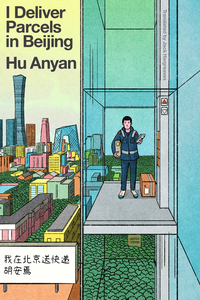
I Deliver Parcels in Beijing is a memoir recounting experiences working a long string of menial jobs in contemporary China. The excellent first half begins with the author working in a delivery company warehouse, “from seven in the evening until seven the next morning,” with a half-hour break for dinner. Most of his jobs aren’t so grueling. Some are tedious, some are boring, some are chaotic. All are low-skill, at least nominally. The author finished high school, which included an internship working as a waiter at a hotel, but didn’t go to college. Later, he takes some night school classes but struggles to balance this with a job at a gas station. These days I feel there is no shortage of news about China’s impressive advances in science and technology and the massive numbers of scientists and engineers it is training. I often wonder what life, and work, are like for those who aren’t in the high-tech or highly educated parts of Chinese society. One gets some sense of dazzling infrastructure and comfortable public spaces – both of which are fading in the U.S. – but this doesn’t depict life at the scale of an individual. I Deliver Parcels in Beijing was, therefore, a welcome read.
Especially valuable, and lacking from most journalism, are numbers: salaries, rents, costs for food. At the delivery warehouse in Foshan (not far from Shenzen), 2017-2018, the author’s monthly salary is about 4700 yuan/month (about $700, or $1200 at purchasing power parity). His rent for a small room is 400 yuan/month, but it would be 500 in the nearby larger town that most workers stay at (p. 14). Delivering parcels in Beijing, his salary depends on how many orders he fulfills, but it ends up on average to be about 7000 yuan/month ($1100/month, not PPP), or 270 yuan for each of the 26 eleven-hour work days per month (p 105-106). “A simple dish of rice and meat cost 15 yuan,” but more important is the time cost – if it takes 20 minutes, that’s an additional 10 yuan of lost income; he therefore generally skips lunch. However, a far larger amount time is lost because of inconsiderate customers who force him to wait with packages and sometimes re-deliver them. It’s these interactions, not the labor itself, that grind the author down. A few times, he must pay out of pocket to replace packages lost or mishandled due solely to a customer’s negligence, or fraud.
In Shanghai he briefly works at a convenience store, living in “a small partitioned apartment. … There were two other occupied partitions in the apartment, a communal toilet, and a living area. There was no kitchen… The rent was 1,500 yuan” (p. 155). He spends about 30 yuan per day on food, forced to eat takeout because there’s no place to cook. He soon is hired by a bicycle shop run by a capricious non-cycling owner and staffed by skilled technicians and some ethically-challenged workers, making 3000 yuan/month (about $450, p. 159). He’s able to live in the shop, though, rent-free. I’m not sure of the year, but I think it’s around 2015. “Our regular working hours were ‘996’ … open nine to nine, six days a week. But customers often lingered past nine.” (p. 172). In 2013 or so, salary at a clothing store is 2000 yuan/month (p. 201). As a mall security guard (job #13) in Xiaguan in 2012 or 2013, 1500 yuan/month; rent is 330 yuan/month. “I could quite happily live on 1,500 yuan” (p. 273).
I had assumed, given that China is a Communist country, that health insurance would be ubiquitous and provided by the state. This seems not to be the case, though, and non-permanent employees, or whatever the tier the author always falls into, must find and pay for treatments on their own. While a parcel courier, the author falls ill with viral pneumonia and requires a week of medical care. Including the missed days of work, “this single period of illness set me back some three thousand yuan, which was what I earned in half a month” (page 84). If we don’t include the missed salary (¥ 6000/month), this means he paid out of pocket about ¥ 1500.
Like The Road to Wigan Pier, the book is largely about work. Also like The Road to Wigan Pier, its first half is better than its second half. The second half moves back to the author’s first job in 2009 or so, continuing through his sixteenth. Yes, sixteenth. Some end as the business fails – fly-by-night operations to sell knockoff clothing or food no one wants. Most end as the author, who is painfully shy and conflict-averse, leaves of his own accord, to start afresh. The author comments throughout on his motivations, the character of his colleagues, and the nature of work.
The things missing from the book, from a US perspective, are striking. Despite clearly being on the poor end of the Chinese social scale, the author seems never to worry about violent crime or anti-social behavior, and he can assume that trains will run and parks will be usable. Corruption, or selective enforcement of regulations, is an issue, though. [I added this paragraph a few hours after the original post.]
The author reads a lot. He comments on the impact authors like Raymond Carver, Ernest Hemmingway, and Franz Kafka had on him. It’s uplifting to read all this – a testament to the universality of great literature – but a bit sad to see that simultaneously, in the US, classic literature is fading from high school curricula, as is even the reading of novels at all. Hu Anyan ends with an admiring note about the down-on-her-luck author of The Memoirs of Mrs. Pilkington, who he encounters through Virginia Woolf, who “possessed an immense passion for life” and was “both compassionate and vengeful.” This book isn’t as passionate or vengeful as of Mrs. Pilkington’s seems to have been, but it does a good job of recording the vagaries of life.
Other notable nonfiction
Two of my favorites included references to Oregon!
- Travels with Charlie: In Search of America – John Steinbeck (1961). Steinbeck travels around the US in a camper truck. After a man at a gas station goes above-and-beyond to get desperately needed new tires: “That happened on Sunday in Oregon in the rain, and I hope that evil-looking service-station man may live a thousand years and people the earth with his offspring.” Elsewhere: chilling demonstrations by racists in Louisiana that contribute to him cutting short the whole trip.
- Entangled Life: How Fungi Make Our Worlds, Change Our Minds & Shape Our Futures – Merlin Sheldrake (2020). About fungi: biology, ecology, history, mysteries. An excellent pop-science book – beautifully written but also dense with information. Not surprisingly, Oregon comes up often, and I learned that we’re home to a gathering called the Radical Mycology Convergence. I already knew about our local (Eugene) mushroom festival; this place is full of fungi. (And moss, and lichen.) Among the many things I learned: it’s strange enough that lichen isn’t a single organism, but a symbiont – fungus plus photosynthetic algae or cyanobacteria – which I knew; but apparently, it was discovered in 2016 that lichens can often comprise multiple fungal species that all, somehow, work together. https://www.goodreads.com/book/show/52668915-entangled-life
Historical Fiction
Of the 36 novels I read this year (which includes 4 I abandoned), several of my favorites could be called historical fiction:
- Wolf Hall – Hilary Mantel (2009). A long but fascinating portrait of Thomas Cromwell, and also a portrait of his time. I will admit to not knowing much about the period beforehand; in fact, I didn’t realize that Thomas Cromwell and Oliver Cromwell were different people. The book details the machinations of those in power, those who work with those in power, and those who want to have power. Especially poignant is the proximity of death – Cromwell’s beloved wife and daughters die very suddenly of the “sweating plague,” the wife within a day. Perhaps related: punishments are brutal. Reading about the past almost always makes me glad to live in the present, despite its flaws.
- Creation – Gore Vidal (1981). The narrator, a Persian grandson of Zoroaster and friend of Xerxes, tells us of his youth in Persia and his travels to India and China, during which he met Buddha, Confucius, and others. I’ve always found it amazing that so much was happening, in so many places, in the fifth century BC, and it’s great to read a historical novel about this amazing period. The book covers a lot of ground. Its drawback is that it at times reads like a textbook, presenting too many names and details. At 500 pages, it’s too long. Still, every section has many fascinating bits. I’d only give it four stars out of five, but it’s worth reading.
- City of Thieves – David Benioff (2008). My note on this just begins, “Wow!” During the Nazis’ siege of Leningrad, amid starvation and destruction, two young men embark on a bizarre quest to find eggs for an army colonel. The descriptions of hunger and misery are palpable, yet the book is often hilarious, the older protagonist conveying to the younger his tips for squeezing enjoyment out of life (mostly involving women). The novel has it all – historical insights, three-dimensional characters, a riveting plot, and humor. Why isn’t this book more well known?
Other notable fiction
- My Stupid Intentions – Bernardo Zannoni (2021). Narrated by a beech marten, the story of his (unrealistic) life, especially after he’s sold to a fox from whom he learns to read. All their lives are full of cruelty, frustrated desire, and animal passions; the marten can’t really articulate his hope for something better. Short but fascinating.
- Journey by Moonlight – Antal Szerb (1937). I noted this one in my 1937 blog post.
- Blindness – José Saramago (1995). A sudden epidemic of blindness strikes, sending its first victims to a hospital where the veneer of civilization is quickly eroded. One person retains her sight. Often bleak, but captivating and wonderfully written. Much more intense and fast moving than Saramago’s other novels that I’ve read.
- Cities of the Plain – Cormac McCarthy (1999). Book 3 of the Border Trilogy. Again, it helps to know a bit of Spanish. More than the previous two books, the contrast between the Old West and the modern world (trucks, the Army buying land) adds tension.
Sound and Vision
Looking back at my notes, I was surprised to see that 11 of the 13 nonfiction books I consumed this year were audiobooks. (Fiction: 12/36) As noted a few years ago, I got into audiobooks when I started running longer distances. It wasn’t intentional that I listened to such a high fraction of nonfiction; perhaps I’ll balance more this year.
I only read three comics in 2025, one of which was great: All Tomorrow’s Parties: The Velvet Underground Story by Koren Shadmi (2023). I was perhaps predisposed to like this, since the Velvet Underground were amazing and their first album remains unlike anything else. Still, I was impressed by this book. It tells its story crisply, and the excellent artwork and compelling dialog really complement each other, the pictures filling in the mood and context of events. It’s amazing to read about the band’s dogged determination to defy convention and make art. It’s also, returning to the theme of work, hilarious to read that their first paid gig was at a high school, where they stunned the audience with abrasive songs about topics like heroin addiction.
Today’s illustration…
Someday I’ll paint a picture of Smith Rock that I like. This isn’t it.
— Raghuveer Parthasarathy, January 1, 2026
 The Eighteenth Elephant
Followed your blog for a bit (maybe referred via posting on Andrew Gelman’s?). Not a book, but I wrote about growing up and working on farms and factories in rural Pennsylvania (I am around 10 years younger than you). It is a not quite book review of Vance’s Hillbilly Elegy.
This is fascinating — thanks!
Hi Raghu, look forward to reading your list of books every year (and discussing them at March Meeting). As usual, I did not make a list so I am doing this off the top of my memory. For me the highlights were Middlemarch by George Elliot (I think the reputation is extremely well deserved) and Libra by Don Delillo ( my favorite of the 5 Delillo books I have read). In addition, for non-fiction I liked Adolp Reed’s new anti-memoir The South and Branko’s Capitalism Alone.
Hi Pankaj — it will be great to chat in March! I’ve only read one book by Don DeLillo, White Noise, but coincidentally it was in fact in 2025. If the last third were better, it would have made it onto my “best of” list. I thought the first third was brilliant, and hilarious.
Also not quite making the list, They Will Drown in Their Mothers’ Tears, which you recommended. I liked it, but it also couldn’t live up to its first third!